Thursday, July 18, 2013

What is it?

What is it?

A tadpole?

A newborn snake?

Nothing so exotic, I'm afraid.

Just a teaspoon with a dark drop left in the bottom.


Wednesday, July 17, 2013

Guinea fowl

Here's the original of an artistic representation displayed at the Van Dusen Gardens Zimsculpt exhibition in 2011. The Portuguese introduced African Guinea fowl to Europe and America.

Gail Damerow describes raising a flock of these interesting "chickens" here. The live bird in the left picture was seen at the zoo in Aldergrove, while the artistic rendition below was displayed at Van Dusen as part of the 2011 Zimbabwean sculpture exhibition.

Tuesday, July 16, 2013

Impala


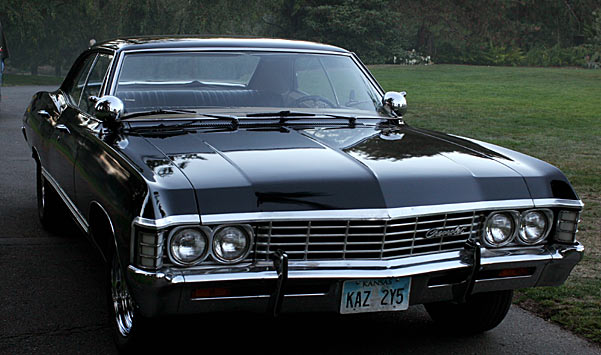
In high school, I used to think an Impala was just a slick Chevy like the one owned by a classmate.

In spite of the logo with the horned animal, I didn't clue into the fact that it was an African antelope until many years later.


Above: Chevy Impala photo from supernatual

The two gentlemen impalas in the picture are resting in the Aldergrove zoo. The male horns can be up to a metre in length, though the animal stands only 2 to 3 feet tall. Female impalas have no horns.

Though the OED lists the word impala as being of Zulu origin and the verb impale as being from old French and Latin, it's hard to believe the two words are not related. Word origins aside, I sure wouldn't want to be impaled by those horns.

Monday, July 15, 2013

Amazing Ankole cattle

Ankole cattle at Greater Vancouver Zoo

Ankole-Watusi cattle, a 6000-year-old breed, live in east-central Africa and can trace their ancestry back to the Nile Delta, where their ancestors lived about 4000 years ago.

Their enormous horns, bigger than those of any other breed, serve as a cooling system. The blood flows through them, dispersing the body heat of these large animals.

Daniel Semambo of the Uganda National Animal Genetic Resources Data Bank explains in this film why Ankoles must be protected.

Due to the farming practice of cross-breeding these hardy local animals with exotic breeds in order to produce more milk and meat, the numbers of purebred Ankoles is going down.

As communal pasture land reduces, and as droughts increase with more forests being cut, the government of Uganda is working with farmers to ensure the long-term viability of this ancient and resilient breed.

Ankole cattle also have cultural significance in marriage and other ceremonies of the people who raise them. 

Sunday, July 14, 2013

Marabou stork

It's strange that the stork should have been chosen as the storied bird that brings the new baby.

These huge sharp-beaked creatures are carrion eaters with  wingspans of up to 3 metres. The sign in the zoo states that the bald head is an evolutionary development: it allows the stork to place its head inside a carcass while eating with a minimum of fuss and mess.

Along with their favoured carrion, Marabou storks also eat fish, insects, and small animals.

Native to sub-Saharan Africa, these storks are also called undertaker birds, a name that, according to the Toronto zoo, refers to their appearance as well as their activities.


Marabou feathers have long been important in fashion.

This elegant stole of soft marabou is for sale at Abercorn and Company, priced at one hundred eighty British pounds.

Saturday, July 13, 2013

Lion spray warning

This warning is painted at intervals along the benches in front of the lion area in the Aldergrove zoo. I have a couple of questions:

1. Why are the benches placed there if the lions are likely to spray in that area?

2. Does anyone ever sit on these benches? If so, why?

In this video, taken at the San Diego Zoo, a lioness is fed meat by hand, and a lion licks his mate's head fondly.

Then, apparently fed up by the laughter of the encroaching guests, who are ignoring the spray warning sign, he turns his back on them and lets fly.

Friday, July 12, 2013

Strange little creatures

The relative positions of these two seated South American animals suggests an uneasy truce or a hesitant friendship.

Native to Argentina, the Patagonian cavy, also known as a mara (right) resembles both an antelope and a jackrabbit. These animals are often kept as pets.

Its companion, the capybara, the world's largest rodent, is semi-aquatic with webbed feet. Two feet high, it can weigh up to 80 kg.