Monday, December 31, 2012

Sweet Tooth by Ian McEwan

Book cover photo: National Post

Recently I've been reading a lot about Bletchley Park, and earlier this year I visited it.  Somehow I didn't imagine that in 1972 Britain the recruiting would still be going on, with young recruits signing the Official Secrets Act, promising to reveal nothing about their work in the shadow world of spying.

The induction of a young woman into MI5 is how master novelist Ian McEwan begins his story. When she begins her work for the security service, Serena is twenty-one, green and hurting from an affair with the middle-aged Tony Canning, a married Cambridge professor.

The affair with Tony takes place in a cottage near Bury St. Edmonds, close to where the novelist Angus Wilson lived -- he served in Bletchley Park and later taught at the University of East Anglia, where Ian McEwan took his Master's degree. I couldn't help wondering whether the cottage where Tony Canning conducts his affair with the lovely Serena might be based on the cottage where Wilson lived, and where he and his partner Tony Garrett were visited by many of Wilson's students as well as fellow literary luminati.

After her initial stint as a low-level secretary (at the time, females did the dog work and couldn't be agents), the task taken on by this Cambridge-educated mathematics graduate proves highly unusual. Turns out it's her voracious reading habit and knowledge of books that MI5 is after. The Cold War continues, and plans are afoot to win the ideo-cultural struggle by alleviating the notoriously uncertain financial lives of certain secretly chosen writers, so they can produce work that is a credit to our side in the propaganda war. 

The big story questions all centre on young Serena's love life. Counting the man she doesn't realize is a homosexual, this gorgeous young blonde races through four paramours. As the plot moves forward, readers wonder. Why would Tony Canning stage a breakup over a domestic detail, thus ending a satisfying secret affair with a beautiful woman many years his junior? As for colleague Max Greatorex: when Serena gets over her crush and moves him along, would he lose his MI5-style cool, and do something foolish, vengeful or worse?

Up-and-coming author Tom Haley, beyond the most basic due diligence, does not ask questions about why he should be chosen. Serena relies on the old idea of ask me no questions, and I'll tell you no lies. After all, what novelist would ask questions when some obscure artistic organization seeks him out to hand over a fat cheque every month for the next three years so he can live the dream of focusing on his art?

This book has a comic flavour; there are elements of the ridiculous throughout, interspersed with deftly handled literary criticism and allusions to various elements of history that are all too dark and all too real. I loved Max Greatorex's speech to "his" author in which he explains that "any institution, any organization eventually becomes a dominion, self-contained, competitive, driven by its own logic and bent on survival and on extending its territory."

A favourite remembered image is the one of Angus Wilson, one moment urbane in his white suit and lavender bow tie, then turning puce in the face and threatening to rough up an agent who tries to interfere with the work of the arts organization he heads. McEwan must have had fun with that scene. One almost sees the 'camp' Wilson; with his penchant for sharp comedy, he was probably laughing from the other side, even as McEwan typed.

Another rich but understated comic vein: Serena is the obedient daughter of a bishop and she has majored in Maths at Cambridge, rather than her beloved subject, English literature. After signing the Official Secrets Act, she falls into an affair with someone in whose life her employer is secretly dabbling. Either she expects to get away with it, or she's just too immature and naive to face up to the danger for both of them.

A colleague leaves the security service to sell beds, and Tom Haley is the bright young author chosen to receive the stipend. He is meant to make communism look bad, but fails to produce what MI5 secretly hopes for but only vaguely requests.

The story is set during the early seventies against the background of Irish terrorists, the crippling miners' strike and the energy crisis. Tom gets a publisher before he's quite ready to go to press, and ends up handing in a lightweight and incompletely edited dystopia about the fall of the energy-glugging west, for which he nonetheless receives the prestigious Austen prize.

The author of many respected books including the recent Solar, McEwan is a brilliant plotter, and of course there are surprises to the very end. The novel is a good read and a satisfying send-up of government secrecy and MI5's real and bizarre relationship to fiction writing. Truth may be almost as strange as fiction in the case of this book, but even a dedicated researcher can't be absolutely sure -- so much of the information required for a rational assessment is still classified.

Sunday, December 30, 2012

Jigsaw success

Photo by Marco

A Sisyphean task, it still has to be done each Christmas.

In this jigsaw, The Canadian travels through the Southern Rockies, with the observation car, The Banff Park, in the lead.

Assembling this puzzle brought the usual feeling of satisfaction, as well as evoking memories of a train ride from a long time ago.

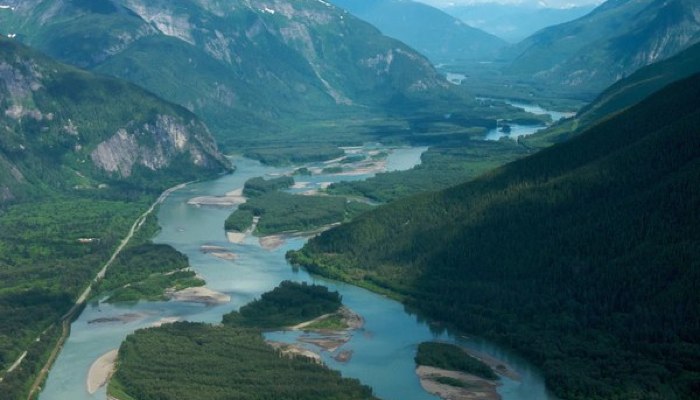
In 1958, I was a child looking through the train window in wonder, seeing the Rockies for the first time. For that young girl, the journey from the flat Alberta prairie to the mountainous Skeena Valley was a geographic marvel. I still remember the rocking and creaking of the train as I lay in the small snug world of the upper berth.

I've had a fondness for trains ever since.

Saturday, December 29, 2012

Mystery solved!


Photo CT 2012

The clues to the mystery are the bag of potatoes, the wig, the rope, and the bloodied oar. And of course, the red herring, which in this case is a literal fish, wrapped in brown paper.

The victim was the psychiatrist, or so Robert George of the SFPD tells us. In a short booklet that comes with the puzzle, he also shares transcripts of his interviews with three suspects, all of whom are obsessed with the movies of the Master of Suspense, Alfred Hitchcock.

Did we solve the crime? Almost. We figured it all out except for the final twist. It was like watching a Hitchcock movie.

Tuesday, December 25, 2012

Raffia angel, neighbours and Hitchcock jigsaw

Photo from Helen Mirren's website

Christmas means family, and neighbours, and angels. In fact, our dearest neighbours just gave us a lovely raffia angel to stand outside the front door. When Pinky also handed over a jigsaw, I remembered telling her in the summer that Christmas just wouldn't be Christmas without these puzzles.

We have others -- a Renoir repro and a painting of a vintage CPR train. Actually, not too much older than me, actually. It looks awfully like the train we rode on when I was eight years old and we moved to BC from Alberta.

This year's puzzle piece de resistance is the Alfred Hitchcock Mystery Jigsaw our daughter brought home. You (re)read the story, using the clues to help with assembly.

Having just seen the wonderful movie, Hitchcock, with Anthony Hopkins and  Helen Mirren, we are ready for that one. I have the coffee table cleared and ready. The season opens tomorrow, Boxing Day.

We've had some fine jigsaws in the past -- a 3-D building one, the Rosetta Stone, and even a wolf-shaped puzzle painted in with a winter scene of wolves in the forest.

One more sleep. Then, let the puzzling begin!

Monday, December 24, 2012

All Clear, by Connie Willis

Book cover photo from Goodreads

Well, maybe not quite clear, at least sometimes. This second part of the time travel story that begins with Blackout involves a dizzying array of contingencies.

Of course, my occasional moments of confusion may be related to the fact that I listened to the two cds in reverse order. Unintentionally, of course.

Anyway, I thoroughly enjoyed this tale and was sad to finally say farewell to Polly, Eileen, Stephen, Paige and others. I was also pleased to be reunited with a character who kept a promise, and to discover that an aging man had more allies and less to worry about than he, and the reader, had thought.

And I learned a lot more details about the war, especially the Blitz. I especially enjoyed the bits about the code-breaking centre of Bletchley Park, as part of my novel under construction is set there.

Saturday, December 22, 2012

Christmas dress for Evy

Photo: newly shortened Christmas dress for Evy.

Today I hand-hemmed a fancy Christmas dress for a four-year-old. I was with my friend while she shopped for her granddaughter. When she expressed regret that this one was too long for Evy, I volunteered to shorten it.

Sitting by the Christmas tree with needle and thread mined rich veins of memory.

First, Christmas dresses and little girls. When our daughter was this age, we got her a fancy Christmas dress in red with black velvet trim and a crinoline skirt. She was mighty pleased, and I took a lovely picture of her wearing it with the new ice skates Santa brought her the same year.

Next, hand sewing. Until a few years ago, I used to sew a lot, and was willing and able to do finishing work by hand. Now I do most sewing, including hems, with my old Bernina sewing machine. But the skirt of this dress was cut on the bias, and I had to gather the top part of the hem, iron it down and then do the stitching by hand. A lesson in patience, and memory.

Finally, Evelyn. When I was a child, I adored the name Evelyn, and in fact, the first doll clothes I ever made were for my doll Evy. Once very popular, this name is now rare. Until a few years ago, Vancouver had an Evelyn club for women who shared that name.

May Evy enjoy the Christmas season in her fancy dress, not only this year, but next, when her Mom will be able to let it down, because I turned up the extra fabric rather than cutting it off.

Thursday, December 20, 2012

Slush, "snumps" and "slush bombs"

I know all about slush (see yesterday's post), and I've been familiar with the "snumps" so elegantly named by Michael Enright and Jane (whose last name I can't recall) on a CBC program a few years ago. Snumps (snow lumps) are the dirty blobs of snow that fall behind cars as the temperature rises. They are formed when the fresh snow comes unstuck from the metal of the wheel wells.

But slush bombs? They seem to be a new weapon. The story on the front page of The Vancouver Sun, complete with video, reports that  these 'slush bombs' endangered drivers and damaged vehicles. This happened yesterday on the new $3 billion Port Mann Bridge during the first snowfall of the year. Lumps of ice rained down from the cables, smashing windshields and mirrors, even crashing through a sunroof to injure someone.

This is weird. We have other suspension bridges in the area -- notably the Lions Gate, built in 1937. No ice bombs fell on it. And we also have the huge Alex Fraser Bridge, much newer and longer that the one across the First Narrows, and it too seemed to be slush bomb-free.

To add insult to injury, commuters had just started paying tolls for this newly completed and much-touted crossing of the Fraser. Then yesterday it proved to be a minefield (mines from above).

The builders of the bridge are throwing up their hands, using a modern paraphrase of the Act of God argument: the conditions were rare, and it could happen to any man-made structure.

Only it didn't. It just happened on the New Port Mann. Even though the whole region had more or less the same weather. Maybe those soaring post-modern cables are too numerous or too steep.

Meanwhile, the story made the Globe and Mail too. Engineers are looking at ways to stop the bridge hail from happening again.